

Treat Keratoconus for Vision Preservation
When your vision continues to change despite wearing a new pair of glasses, it’s time you should think about being examined for Keratoconus. Changes in prescription, increased astigmatism and poor vision at nighttime are some typical symptoms of Keratoconus that should not be overlooked.
Akashdeep Netralay provides a thorough screening along with personalized Keratoconus treatment using cutting-edge diagnostics and evidence-based treatment modalities. Recognizing Keratoconus early can help preserve vision.
What Is Keratoconus?
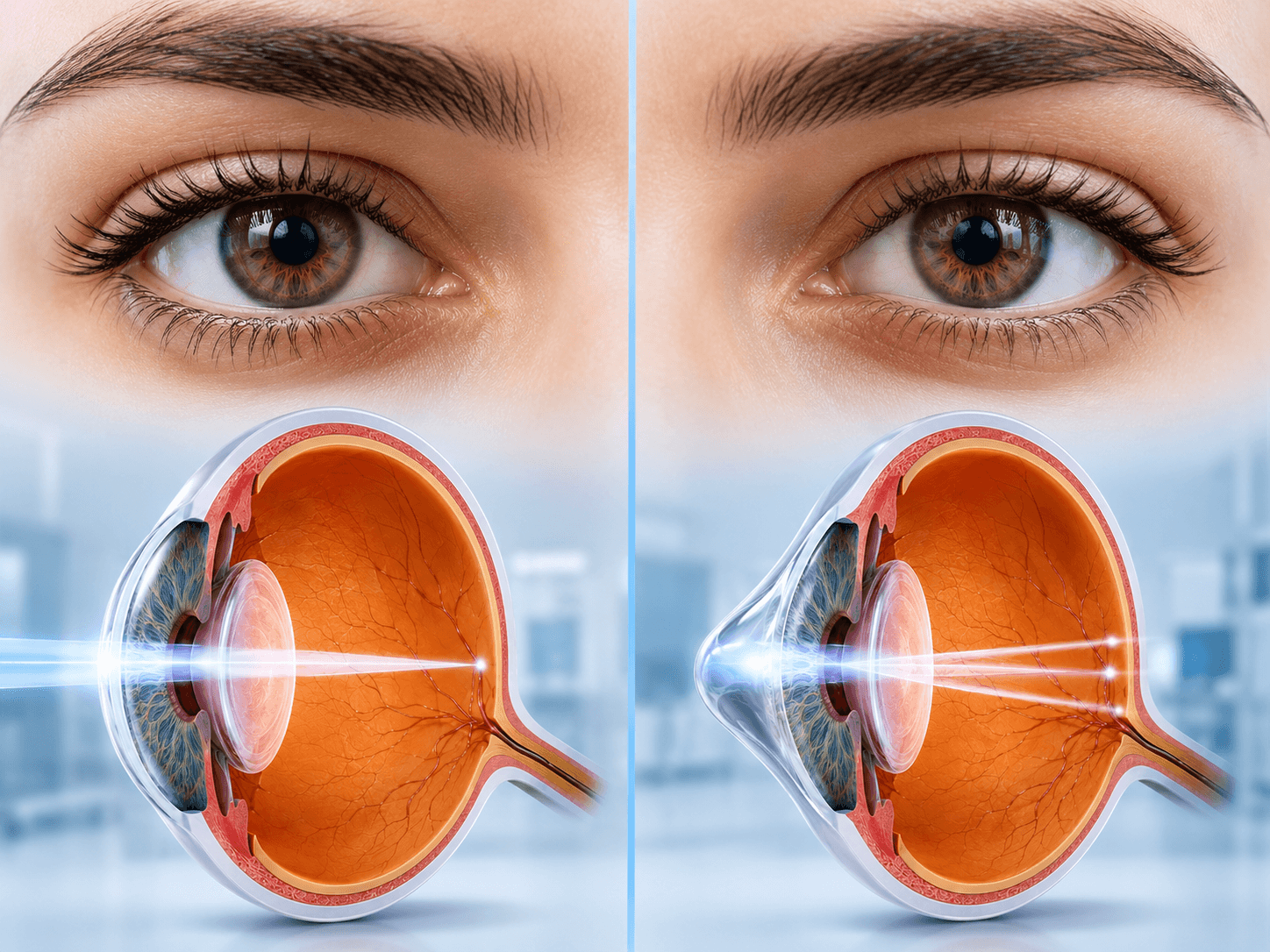
Keratoconus is a condition of the eyes that causes the cornea, which should have a spherical form, to thin out and bulge outward in the form of a cone. The cornea is responsible for focusing light entering the eye on the retina. As a result, with keratoconus, it gets more and more difficult to have clear vision.
This disease occurs in adolescence or young adulthood and usually takes some time before stabilizing itself. There is a possibility that keratoconus could be present in one or in both eyes but never equally affecting them.
The exact reason for this disease remains unclear. Nevertheless, it is assumed that the deterioration of cornea tissue plays a significant part in its occurrence. As the cornea becomes more and more irregular and thin, it is more and more difficult to achieve clear vision with standard eyeglasses.
Keratoconus Symptoms
The symptoms of keratoconus tend to develop slowly over time.
These symptoms include:
- Burred vision
- Seeing distorted or wavy images
- Frequent need for changing spectacle prescription
- Rogressing or irregular astigmatism
- Double vision in one eye
- Halos around lights
- Glare, especially when driving at night
- Reduced visibility in darkness
- Sensitivity to bright light
- Ye fatigue
- Touching and rubbing of eyes
- Failing vision even with a recent prescription of glasses
This progressive disease is commonly mistaken as a gradual need for strong glasses because its development process is relatively slow. It is vital to undergo regular eye tests especially for teenagers and young adults.
Cause and Risk Factors
While the cause of keratoconus is unknown, most experts believe that the condition is caused by a combination of both genetic and environmental factors.
A few of the risk factors include:
- Family history of keratoconus
- Individuals who have a genetic predisposition
- Regular and forceful eye-rubbing
- Eye allergies
- Asthma
- Eczema
- Some forms of connective tissue disorder
- The patient’s young age
- Loss of strength in the cornea
Although keratoconus cannot be totally prevented, minimizing eye rubbing and controlling allergies could be helpful.
When Should You Consult an Eye Doctor?
Schedule an eye exam if you have any of the following:
- Change in glasses prescription frequently
- Smudged vision even with new spectacles
- Hypermetropia increasing
- Problematic vision during night time
- Haze effect when looking into the light
- History of keratoconus in the family
- Quick alteration in eye power in adolescents and young people
An early evaluation would help your doctor diagnose the changes taking place in your cornea.
Get a Comprehensive Eye Examination Appointment
How is Keratoconus Diagnosed?
The process of keratoconus diagnosis is more complicated than the regular eye examination. In addition to the general eye checkup, special technologies are used in order to identify the disease, including its initial stage.
Among other things, your examination will include:
Comprehensive Eye Exam
The doctor will examine your eyes’ health condition, listen to the description of your complaints and take into account your medical history.
Visual Acuity Test
A test which checks how sharp your vision is at different distances.
Refraction Test
Different strengths of lenses will be applied to find out what the best vision-giving prescription is.
Corneal Topography
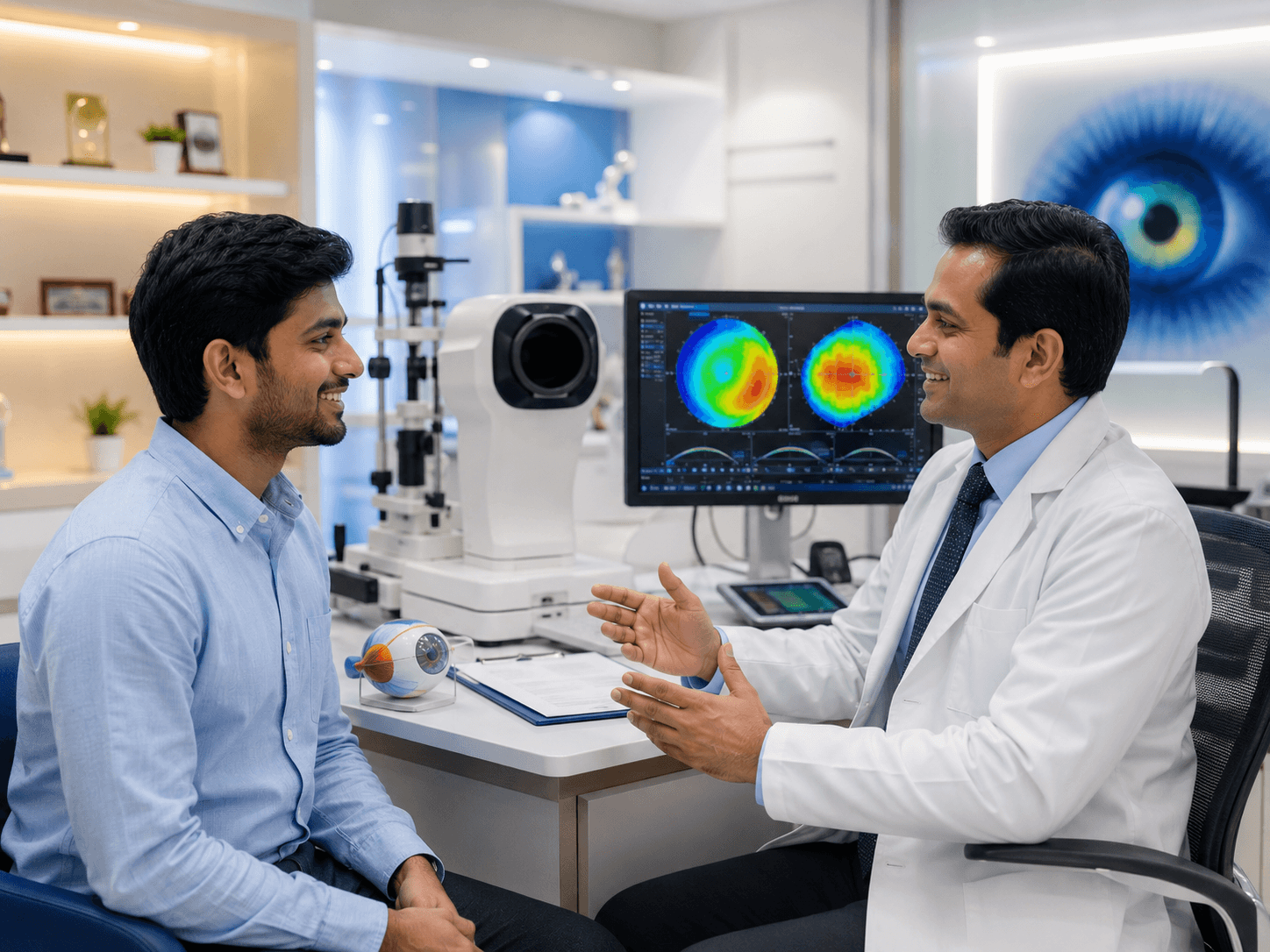
This test creates an image of your cornea and is used to detect the changes in its shape.
Corneal Tomography
This technique allows to create a 3D image of the cornea and detect some changes in it that are hard to notice during regular eye examination.
Pachymetry
This test checks the thickness of the cornea, which is very important in terms of diagnosing keratoconus since it is one of the main characteristics of this disease.
Slit Lamp Examination
The doctor will conduct the examination of your cornea with the help of a slit lamp microscope.
It will allow your ophthalmologist to advise you on treatment that will help save your vision in the long run.
Keratoconus Treatment Methods
Keratoconus treatment is defined by its progression, degree and personal visual requirements. It is aimed at preserving vision, improving its quality and protecting the cornea from any further weakening.
Observation
If you have a mild form of keratoconus which is stable, treatment may be postponed. You will need to undergo regular check-ups and monitoring with corneal imaging.
Glasses
In case you have mild keratoconus, prescription glasses can give you a good vision. In case keratoconus progresses and causes more irregularities of the cornea, glasses will not be effective anymore.
Contact Lenses
Contact lenses are prescribed in case glasses cannot ensure your satisfactory vision. They form a smooth optical surface of the eye.
Soft Contact Lenses
Soft contact lenses can be useful for some patients with a mild keratoconus. However, they can fail to correct vision in case the cornea is irregular.
Rigid Gas Permeable (RGP) Lenses
RGP lenses keep their shape on top of the cornea, which allows the creation of a smooth refracting surface and sharp vision in many patients with keratoconus.
Hybrid Lenses
Hybrid lenses have a rigid center with a soft peripheral ring. These lenses are designed to provide clear vision of the RGP lenses but with higher wearing comfort.
Scleral Lenses
Scleral lenses sit on the white of the eye and not on the cornea. As these lenses vault above the irregular corneal surface, they provide good vision and comfort in many cases of moderate to advanced keratoconus.
Cross linking is usually advised for patients with keratoconus if there is progression of the disease. Although some patients might find themselves gradually improving their vision, the actual goal of cross linking is stabilization of the cornea.
INTACS
INTACS are small and curved inserts that are placed inside the cornea, depending on patient’s suitability for this procedure.
They help re-shape the cornea and reduce corneal irregularity. Vision can be improved in such way in suitable candidates. Not all keratoconus patients are suitable for this treatment; therefore, your ophthalmologist will assess the suitability of this treatment option.
Corneal Transplant
If keratoconus becomes too advanced, and no treatment brings sufficient vision or there is extensive scarring of the cornea, corneal transplant might be required.
Depending on the degree of damage of your cornea, either partial-thickness or full-thickness corneal transplant can be performed by an ophthalmologist.
Importance of Early Diagnosis and Treatment
Early diagnosis and treatment will go a long way towards helping preserve your vision and give you a higher chance of a good outcome in the long run.
Here are some of the benefits that you will get from early treatment:
- Better ability to stop or delay progression of the condition
- Maintenance of useful vision for daily tasks
- Better maintenance of quality of life
- Less invasive procedures when required
- Better management of eye health with regular follow up
If you have been noticing vision changes and frequent updates to your prescription, then there is no reason to wait until the situation gets worse. An eye exam can reveal any problems such as keratoconus and help start treatment on time.
Why Choose Akashdeep Netralay?

Akashdeep Netralay believes in a thorough and personalized approach to keratoconus treatment. Our goal is to diagnose your condition accurately and provide the most suitable treatment for you.
By choosing us, you will receive:
- Well-trained specialists in corneal conditions
- Extensive eye exams and comprehensive analysis of cornea
- State-of-the-art technology for corneal diagnostics
- Specialized personalized treatment
- Most up-to-date treatment options
- Ambient information regarding your diagnosis and treatment alternatives
- Follow-up to keep track of the development of the disease
We aim at helping you preserve your vision through our timely and professional assistance throughout all stages of treatment.
What You Should Know Before the Consultation
The purpose of the appointment is to perform an in-depth analysis of your eye condition and discuss possible treatment options.
Registration
Our team will ask you questions about your medical history, your symptoms and prior treatment of your eyes.
Vision Test
The visual acuity and your current spectacle correction will be evaluated to get insight into how your vision was affected.
Comprehensive Eye Exam
The doctor will conduct a full eye exam to assess the general condition of your eyes.
Corneal Scans
Special scans will help to see the condition of the cornea and detect possible deviations associated with keratoconus.
Diagnosis Discussion
Your ophthalmologist will explain all of the results in terms that are clear to you and will be ready to answer your questions.
Customized Treatment Plan
Depending on the results of your examination, the stage of the disease, and personal visual requirements, you will be offered a treatment plan personalized just for you.
Follow-Up Appointments
Regular follow-up visits are needed in order to monitor the stability of your cornea and detect any possible changes.