

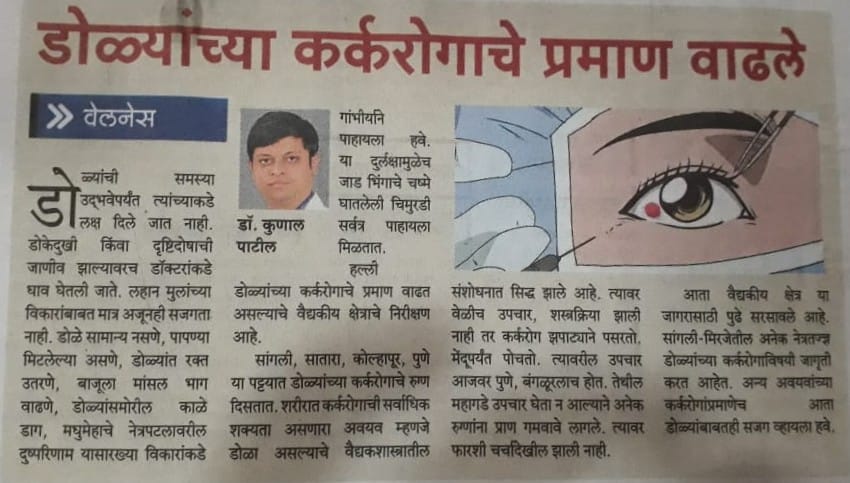
Based on a health awareness article published in a leading local Marathi newspaper featuring ophthalmologist Dr. Kunal Patil.
Growing Concern: Increase in Eye Cancer Cases
A recent health awareness feature published in a local Marathi newspaper highlighted an important yet often overlooked issue—the increasing incidence of eye cancers. The article featured insights from ophthalmologist Dr. Kunal Patil, who emphasized that many patients ignore early warning signs, leading to delayed diagnosis and more complicated treatment.
According to the article, symptoms such as:
- A visible lump or growth around the eye
- Unexplained bleeding from the eye or eyelids
- Persistent swelling around the eye
- Dark or pigmented spots that increase in size
- Gradual loss of vision
- Changes in eyelid appearance
should never be ignored. While many eye conditions are benign, some may indicate ocular or eyelid cancers that require prompt specialist evaluation.
Why Early Detection Matters
Eye cancers can often be successfully treated when diagnosed in the early stages. Modern ophthalmic oncology has advanced significantly, allowing specialists to preserve both vision and appearance in many cases through timely intervention.
The newspaper article notes that delayed presentation remains one of the biggest challenges. Many patients initially attribute symptoms to infection, allergy, or age-related changes and seek treatment only when the disease has progressed.
Advancements in Eye Cancer Treatment
Treatment options today may include:
- Surgical removal of tumors
- Reconstructive eyelid and orbital surgery
- Targeted therapies
- Chemotherapy in selected cases
- Multidisciplinary cancer care
With advances in ophthalmic oncology, many patients can now receive organ-preserving treatment and achieve excellent outcomes when diagnosed early.
Akashdeep Netralay’s Role in Specialized Eye Care
Akashdeep Netralay has been providing comprehensive ophthalmic services across Western Maharashtra for decades and offers specialized care in areas including cataract, glaucoma, retina, oculoplasty, and ocular oncology. The institution highlights its expertise in advanced eye care and specialized surgical services.
The hospital serves patients from Miraj, Sangli, Kolhapur, Belagavi, and surrounding regions, with a focus on advanced diagnostics and evidence-based treatment.
Expert Awareness from the Community
When a local newspaper chooses to feature a medical expert’s opinion, it reflects the importance of the topic for public health awareness. Dr. Kunal Patil’s contribution to educating readers about eye cancer highlights the growing need for awareness regarding rare but potentially sight- and life-threatening eye diseases.
Such educational outreach helps the public understand that eye health is not limited to spectacles and cataracts; serious conditions like ocular tumors can also affect people of various age groups and require specialist attention.
Frequently Asked Questions
Can eye cancer be cured?
Many eye cancers can be effectively treated, especially when diagnosed early.
Is every eyelid lump cancerous?
No. Most eyelid lumps are benign, but persistent or growing lesions should be evaluated by an eye specialist.
What are the warning signs of eye cancer?
Persistent swelling, bleeding, pigmented lesions, vision changes, abnormal growths, or non-healing eyelid lesions warrant examination.
Who should get screened?
Anyone experiencing unusual eye symptoms, especially those that persist or worsen over time, should seek ophthalmic evaluation.
Conclusion
The recent local newspaper feature serves as an important reminder that awareness and early diagnosis remain the strongest weapons against eye cancer. Regular eye examinations, attention to warning signs, and consultation with experienced eye specialists can make a significant difference in outcomes.
For patients across Sangli, Miraj, Kolhapur, Belagavi, and nearby regions, timely access to specialized eye care can help protect both vision and overall health. As highlighted by Dr. Kunal Patil in the newspaper article, ignoring symptoms is often the biggest risk—early consultation remains the safest approach.