

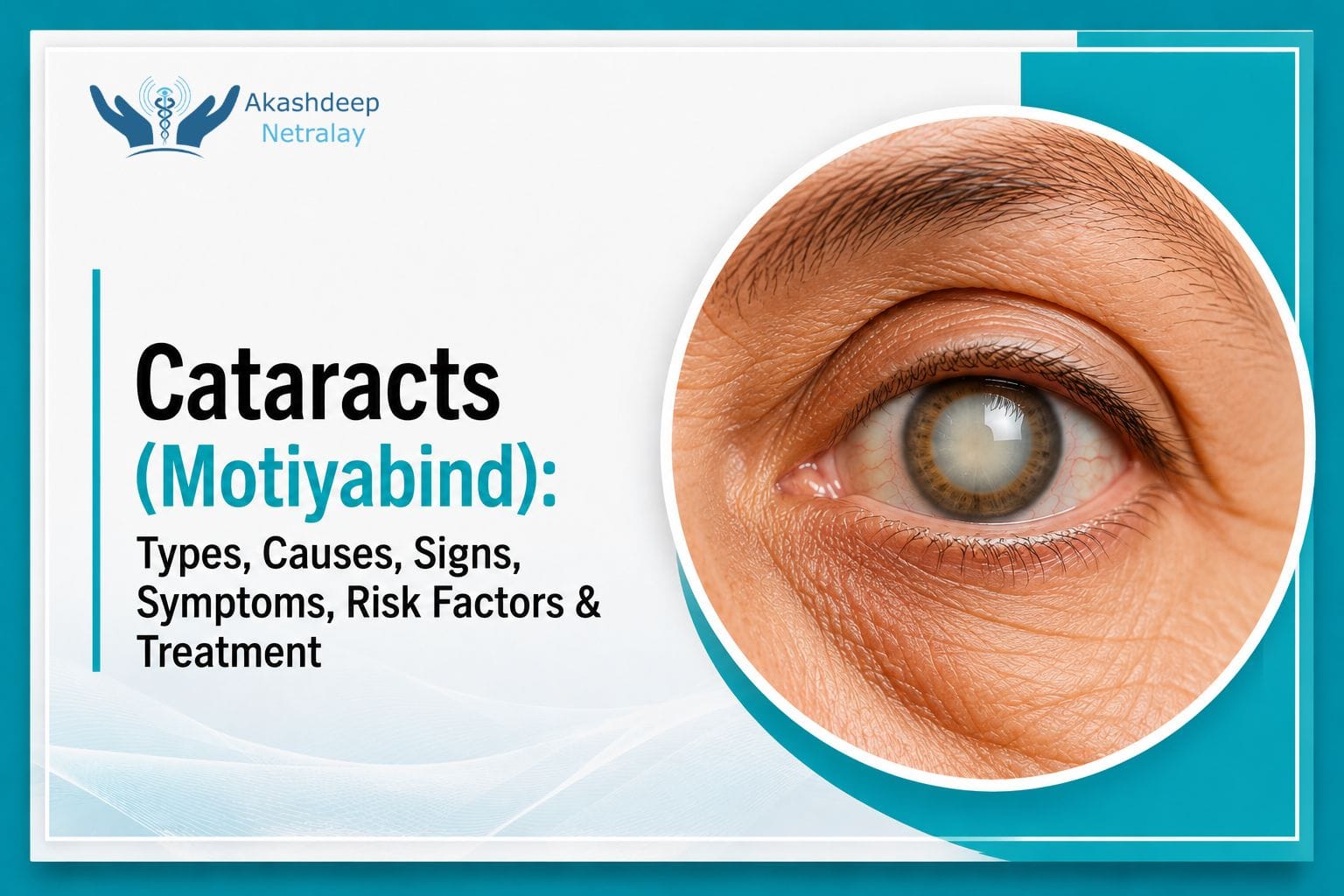
The Motiyabind is a widespread disease of the eyes, also referred to as a cataract, which occurs when the transparent natural eye lens becomes clouded, causing blurry vision. Although cataracts are typically associated with aging, Motiyabind can develop as a result of various conditions such as injury, some diseases, prolonged use of medicine, or even as an outcome of being born with cataracts. Being one of the major causes of poor vision, especially in older patients, it is good to know what causes cataracts, what symptoms indicate that there is a problem, and what treatments are available to address this condition.
What is Cataracts (Motiyabind)?
By definition, cataract occurs in cases when the lens of the eye becomes cloudy. As the natural function of this organ is to focus the image on the retina and thereby provide clear vision, its cloudiness is an important factor to prevent this process. Most often, people describe Motiyabind as vision-blurring that looks as fogging similar to that caused by a dirty camera lens. At first, the symptoms may not be so prominent for the patient; however, eventually, the disease interferes with such activities as reading, working, watching TV, or recognizing people’s faces.
Since the development of cataract takes place gradually, people may not become aware of the issue until it has worsened substantially.
Types of Motiyabind
There are several types of cataracts that differ in terms of the affected part of the lens and thus cause different symptoms.
Nuclear Cataract
Nuclear cataract develops in the core of the lens and is one of the most common age-related Motiyabind. At the initial stage, it is possible to enjoy an improved ability to read and perform close-up tasks. With progressing Motiyabind, vision gets increasingly blurred, and colors start fading out.
Cortical Cataract
This type of cataract starts developing at the edge of the eye lens and gradually expands towards its core, forming white wedges. In addition to blurred vision, patients report problems with judging distances correctly as well as increased sensitivity to light and glare.
Posterior Subcapsular Cataract
As the name suggests, posterior cataract starts developing from the back of the lens. Such cataracts advance relatively fast, interfering with close-up vision and impairing reading, in particular. Many patients experience a pronounced glare effect during driving at night when passing headlights illuminate the road.
Congenital Cataract
In case when people suffer from Motiyabind from birth or during infancy, we talk about congenital cataracts. Typically, this type develops because of infections in utero or specific genetic conditions.
Traumatic Cataract
As a rule, traumatic cataract develops in the wake of some injury inflicted to the eye. The timing of the process may vary and depend on the type of trauma.
Secondary Cataract
It is also possible to distinguish secondary cataract that develops as the result of some underlying diseases or eye surgery. For instance, this type may develop because of diabetes or steroid treatment.
Cataracts Causes
There is much discussion regarding what causes cataracts? The fact is, there are several different triggers for the process of cataracts.
Age
The most common cause of this disease is age. Proteins contained in the lens tend to break and clump with time, causing vision to deteriorate.
Diabetes
Cataracts may develop sooner in people with diabetes due to high levels of glucose.
Eye Trauma
The presence of any kind of trauma or injury affecting the eye lens may result in the development of cataracts either right away or years later.
Taking Corticosteroids
Chronic use of steroid medications is a major factor leading to cataract formation.
UV Radiation
Being under the sunlight without sufficient protection for your eyes may result in cataracts over time.
Smoking
Smoking negatively affects both the body as a whole and the eye lens in particular, leading to an increase in the possibility of this disease.
Drinking Alcohol
Consumption of alcoholic beverages in excess is another common cause of the development of cataracts.
Genetics
Having cataracts in the family is also a risk factor to pay attention to since genes do affect this condition’s appearance.
History of Eye Surgery
Sometimes patients who had eye surgeries before may face cataracts as a consequence later on.
Cataract Symptoms
Early detection of these Cataract Symptoms is important to prevent further complications from this condition.
Blurry Vision
The lack of clarity when seeing objects or experiencing blurry vision while wearing corrective lenses may indicate the emergence of cataracts.
Cloudiness
Seeing objects as if they were viewed through a misty window or a dirty camera lens is often mentioned by patients.
Double Vision
Another symptom is the emergence of two images while using only one eye for sight.
Light Sensitivity
This factor manifests itself in difficulty coping with the effects of bright sunlight or light from the headlamps of cars or indoors.
Poor Night Vision
With the growth of cataracts, people’s ability to see things around in the darkness decreases greatly.
Need to Update Prescription Glasses Frequently
When having to update your prescription glasses or needing new ones regularly, chances are, cataracts have developed.
Diminished Color Perception
People with cataracts may start noticing colors looking pale, dimmed, slightly yellow, or brown in comparison to the previous color perception.
Appearance of Halo Effect
Halo effect refers to rings appearing around light sources. Many patients report a halo appearance surrounding street lights, headlights, lamps, and other light sources, especially at nighttime.
Risk Factors for Developing Motiyabind
Several factors can lead to higher risks of developing cataracts, including the following.
They are:
• Ageing
• Diabetes
• Obesity
• Hypertension
• Tobacco usage
• History of family members with cataracts
• Overexposure to direct sunlight
• Malnutrition
• Long-term steroid usage
• Trauma to the eye area
Even though these risk factors increase the chances of developing cataracts, it does not mean that their presence will automatically result in Motiyabind.
When to See an Eye Specialist
The following list indicates symptoms associated with cataracts, and when any of them occur, it would be beneficial to visit an eye doctor:
• Blurry vision
• Hard time reading books or digital displays
• Light sensitivity
• Troubles driving in dark evenings
• Frequent changes in eyewear prescription
• Double vision of one eye
Starting from 40 years of age, it is highly recommended to undergo routine eye checks even if no problems arise.
How Can Doctors Diagnose Cataracts?
There are several diagnostic tests that specialists utilize in order to diagnose cataracts and determine their severity level.
Eye Examination
A comprehensive check of the eyes allows for evaluating the overall condition and vision status.
Visual Acuity Test
It consists of checking how well a patient can perceive text characters from a distance.
Slit-Lamp Test
A special device helps to examine eye structures located in the anterior part of the eyes by means of high magnification.
Retinal Examination
By using a dilated pupil, specialists check posterior eye structures such as the retina.
Treatment Methods for Motiyabind
Choosing the proper treatment method for cataracts depends on how far the disease has progressed and affects patients’ abilities to live comfortably.
Methods of Treating Cataracts
Early stages of Motiyabind allow applying certain measures aimed to improve vision and facilitate daily activities.
For instance:
- Updated eyeglasses
- Proper home or office lighting
- Antiglare lenses
- Magnifying lenses for reading
Although the above-mentioned methods might ease symptoms, they can never get rid of cataracts.
Cataract Surgery
Once patients notice how Motiyabind affects daily activities such as reading, driving, and face recognition, then Cataract Surgery will be recommended.
During the operation, surgeons remove the cloudy natural lens and implant an artificial intraocular lens. Nowadays, Cataract Surgery removal procedure belongs to the safest and most successful operations.
Usually, cataract operation is fast enough to enable patients to return home on the same day. Following the procedure, many people achieve great results in vision improvement and enhancement of the quality of life.
Cost of Cataract Surgery in India
It is reasonable for a patient to know about the Cataract Surgery Cost prior to undergoing such a procedure.
The general cost might be determined by taking into account several aspects, namely:
• The choice of intraocular lens
• Type of technology applied during the operation
• Infrastructural facilities of the hospital
• Pre-op examination costs
• Experience and qualifications of a specialist
Since each patient has unique needs for treatment, it is better to discuss financial issues with an eye specialist.
Cataract Surgery Recovery Time
Learning about Cataract Surgery Recovery Time may be useful information for patients planning to undergo such an operation.
Recovery Right After the Operation
Most patients start perceiving visual enhancement within several days after the operation completion. Although there are chances that vision will not be perfect right away, further improvement is possible during the recovery process.
First Week Recommendations
During the first week, doctors usually recommend following several recommendations:
- No touching of the treated eye
- Eye drops usage as directed by a specialist
- Keeping the eye protected from dust, dirt, and liquids
Following the above-listed tips will help you recover properly.
Timeline for Full Rebound
Even though many patients can enjoy improvement in vision during the first days after the operation, full recovery may take several weeks.
Tips for Successful Recovery after the Operation
It is vital to follow strictly post-operation instructions and attend regular check-ups. Also, proper use of medication and eye protection can lead to positive recovery outcomes.
Is It Possible to Prevent Motiyabind?
Despite the inability to fully prevent the formation of cataracts, adopting healthy habits will lower the chances of developing them.
To prevent Motiyabind occurrence, consider implementing the following measures:
• Usage of sunglasses
• Controlling diabetes
• Healthy eating, including lots of fruits and vegetables
• Avoidance of smoking
• Alcohol restriction
• Regular visits to an eye specialist
• Maintaining a healthy lifestyle
Importance of Early Detection of Eye Conditions
Early detection can be very important when it comes to protecting our vision. Due to the gradual nature of developing cataracts, many people may adapt to changes in vision without fully understanding how poor their eyesight has become.
A regular eye examination can allow for early detection of cataracts. The early detection means that patients will be able to consider their treatment options and plan appropriate care.
Early treatment can improve eyesight and make a person feel more comfortable and confident while participating in personal and professional activities.
About Akashdeep Netralay
Akashdeep Netralay is an eye center where patients can undergo comprehensive eye examinations and receive proper diagnosis and treatment. Akashdeep Netralay is committed to providing top-notch patient care services using cutting-edge technology and advanced methods of diagnosing cataracts, such as Motiyabind.
Our professionals aim to provide our patients with timely eye diagnosis and effective Motiyabind Treatment options designed to improve vision.
Conclusion
Motiyabind is a common type of eye condition that usually develops in older people. Fortunately, this eye condition cannot cause permanent loss of vision if detected early enough and treated in time. There are many types of cataracts, which require proper diagnosis and treatment. Knowing some of the risk factors and symptoms can be very helpful.
Modern Motiyabind Treatment solutions have already restored vision for millions of people around the world. Proper diagnosis and timely treatment can prevent cataracts from damaging our eyesight.
Call to Action
Do you experience blurring of vision, sensitivity to light, problems seeing at night, or other possible signs of Motiyabind? Please do not hesitate any longer and visit Akashdeep Netralay to undergo a thorough diagnosis and discuss cataract treatments.