

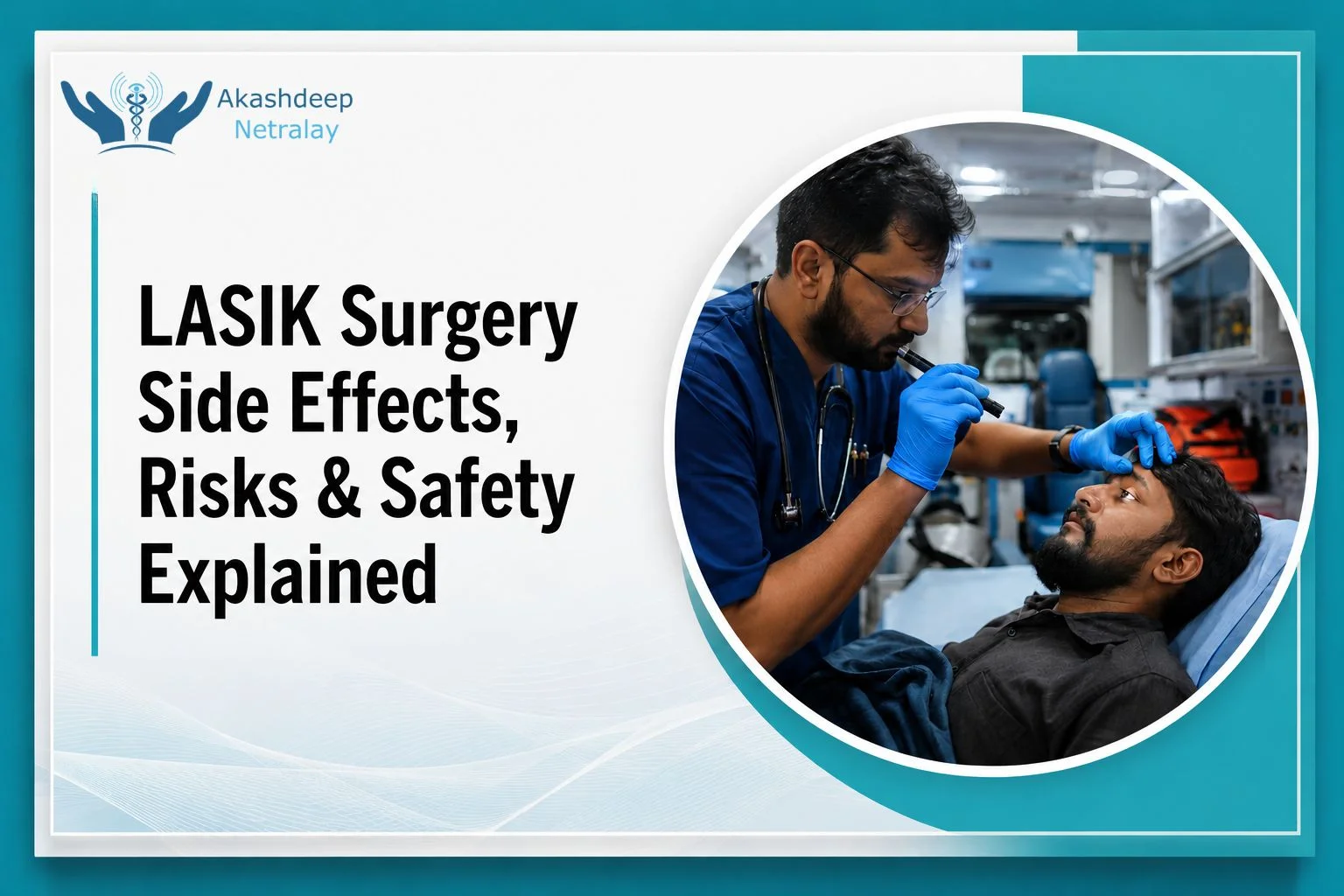
As medicine developed, the LASIK eye surgery appeared as a way for people to get rid of glasses and contact lenses. It is a quick and effective procedure performed worldwide. However, before deciding to undergo LASIK surgery, people are concerned about possible LASIK surgery side effects, risks, and the recovery process.
The safety of patients is always our primary concern at Akashdeep Netralay. Though LASIK surgery is highly effective and safe, every procedure involves certain risks. Knowing the benefits and risks of LASIK, patients feel more comfortable about the surgery.
In this article, you will learn whether is LASIK surgery safe, what risks and complications are possible, how to recover after the surgery, and what measures modern science has taken to ensure LASIK eye surgery safety.
What Is LASIK Eye Surgery?
LASIK (Laser-Assisted In Situ Keratomileusis) is a popular vision correction surgery that allows people to improve their eyesight by correcting such conditions as:
• Myopia (Nearsightedness)
• Hyperopia (Farsightedness)
• Astigmatism
During the procedure, the laser reshapes the cornea, and a person can see well without wearing glasses or contact lenses.
The procedure lasts approximately 10-15 minutes per eye. The majority of patients observe significant improvement in their vision in less than 24 hours after the surgery.
Although LASIK surgery is very popular nowadays, it is surrounded by some myths and concerns regarding its risks, side effects, and suitability for patients.
Is LASIK Surgery Safe?
The main concern that people have about LASIK eye surgery is: “Is LASIK surgery safe?”
Yes, it is. According to statistics, LASIK is one of the safest surgical procedures with an almost 90% success rate. The majority of patients gain 20/20 vision or even better. Thanks to modern laser technology, LASIK surgery risks have significantly lowered.
Before undergoing LASIK surgery, a patient is carefully examined at Akashdeep Netralay. Specialists evaluate such aspects as eye health, age, prescription stability, and corneal thickness. However, like any other procedure, LASIK surgery has certain risks. It is essential to understand both the benefits and the disadvantages of LASIK eye surgery.
Common LASIK Surgery Side Effects
Fortunately, the majority of side effects of laser eye surgery are temporary and improve over time. They are usually mild and easily managed.
1. Dry Eyes
One of the most common LASIK surgery side effects is dry eye syndrome. The signs of this condition include burning, irritation, redness, and a feeling of grittiness.
Dry eye syndrome develops as a result of damage to corneal nerves responsible for tear production.
In most cases, the symptoms of dry eyes disappear in several weeks or months after LASIK surgery. Special eye drops are prescribed to alleviate dry eye syndrome.
2. Glare and Halos
Sometimes people complain about glare, halos, and starbursts around lights while driving at night.
However, thanks to modern laser technology, these laser eye surgery side effects occur rarely.
3. Blurred Vision
Blurry vision can also be observed as a temporary LASIK surgery side effects. It takes days to weeks to regain clear vision after the surgery.
Do not strain your eyes as advised by your eye surgeon.
4. Sensitivity to Bright Light
Another common LASIK eye surgery side effect is increased sensitivity to bright light. While recovering from the procedure, it is recommended to wear sunglasses.
5. Mild Discomfort
Sometimes people experience mild itching, tearing, and irritation during the first few days after LASIK eye surgery.
They pass quickly.
Being aware of the LASIK eye surgery side effects, patients feel more relaxed during the recovery period.
Rare LASIK Risks and Complications
Although LASIK eye surgery complications are extremely rare, they still can occur. Choosing a qualified surgeon and a reputable eye hospital reduces LASIK treatment risks to a minimum.
1. Infection
Though infection after LASIK is very rare, it can happen. Taking appropriate medication and following eye care instructions prevents complications.
2. Flap Complications
To perform LASIK surgery, a surgeon creates a flap in the cornea. Some LASIK surgery risks connected with flap creation and healing include:
Modern laser-assisted technologies have significantly improved flap creation and reduced LASIK treatment risks.
3. Undercorrection or Overcorrection
During LASIK eye surgery, sometimes the laser removes too much or too little corneal tissue. In such cases, the enhancement procedure is required.
4. Corneal Ectasia
This condition is characterized by weakening and bulging of the cornea following LASIK surgery.
However, thorough preoperative eye testing eliminates the possibility of corneal ectasia at Akashdeep Netralay.
5. Permanent Vision Problems
As it was mentioned above, LASIK surgery risks are very low. Nevertheless, in rare cases, patients may face permanent side effects of LASIK surgery, such as:
Knowing LASIK surgery risks, specialists can choose the right patients for treatment.
Who Is at Higher Risk During LASIK?
Unfortunately, not all patients are suitable for LASIK eye surgery. There are several factors that can increase LASIK treatment risks.
If you have:
• Thin corneas
• Severe dry eye syndrome
• Unstable vision prescription
• Keratoconus
• Any autoimmune disorder
• Changes in vision during pregnancy
• Uncontrolled diabetes
You are at a higher risk of LASIK complications.
Age may also influence the outcomes of LASIK treatment. Many people ask whether LASIK surgery is safe for people over 40. Although it is a safe procedure for many patients, age-related changes like presbyopia and cataracts may affect the results.
At Akashdeep Netralay, our specialists conduct numerous eye tests to find the most suitable candidates for LASIK.
How to Reduce LASIK Surgery Risks?
There are several ways to reduce LASIK surgery risks and laser eye surgery side effects and enhance the effectiveness of the procedure.
Choose an Experienced Eye Surgeon
An experienced surgeon is one of the key ways to increase LASIK eye surgery safety.
Using advanced diagnostic tools and an individual approach, our specialists minimize LASIK surgery risks.
Follow Pre-Surgery Recommendations
Before LASIK eye surgery, you will be recommended to do the following:
• Refrain from using contact lenses
• Avoid applying eye makeup
• Inform the doctor about the medications you take and existing diseases
Follow Post-Surgery Instructions
After LASIK surgery, proper aftercare is crucial for a fast LASIK surgery recovery.
Here is what you should do after the procedure:
• Take your eye drops as prescribed
• Do not rub the eyes
• Keep your eyes away from dust and water
• Protect your eyes from sunlight
• Visit Akashdeep Netralay for follow-up exams
Following these instructions helps reduce LASIK surgery risks and promotes quick healing.
Recovery After LASIK Eye Surgery
People recover from LASIK surgery fast.
Immediate Recovery
Within a few hours after LASIK eye surgery, you can notice an improvement in your vision. However, blurred vision and irritation may persist for a while.
First Few Days
The first days after LASIK surgery, you should avoid:
• Swimming
• Intense physical exercises
• Applying eye makeup
• Spending much time looking at the screen
Usually, patients return to work within 1-2 days after LASIK.
Long-Term Recovery
Full recovery can take several weeks or even months.
Regular checkups at Akashdeep Netralay help our specialists control the recovery process.
Knowing the LASIK surgery recovery process after LASIK eye surgery, patients can easily cope with the temporary side effects.
Benefits vs Risks of LASIK Surgery
Considering both LASIK surgery benefits and risks helps people understand whether LASIK surgery is worth it.
Benefits of LASIK
• Decreasing dependency on glasses and contact lenses
• Quick procedure and rapid recovery
• Long-lasting vision correction
• Improved quality of life
• High levels of patient satisfaction
Risks of LASIK
• Temporary dry eyes
• Night vision problems
• LASIK eye surgery complications
• Additional procedures to refine results
• Very rare LASIK surgery side effects
Overall, LASIK is a safe and effective procedure for suitable candidates. Advances in technology continuously increase LASIK eye surgery safety.
When Do You Need to Visit Your Eye Doctor?
Though mild side effects are normal after LASIK surgery, some symptoms require urgent medical care.
Notify your eye surgeon if you experience:
• Painful sensations
• Rapid vision loss
• Progressive redness
• Swelling
• Signs of infection
• Blurry vision that does not fade away
Early consultations prevent LASIK eye surgery complications. At Akashdeep Netralay, we provide our patients with full post-operative assistance.
FAQs About LASIK Surgery
Is LASIK eye surgery permanently safe?
Though being a highly safe procedure, LASIK surgery cannot protect against natural vision changes due to aging. Nevertheless, LASIK eye surgery safety remains high, and it is a great method for vision correction.
Can LASIK surgery cause any damage to the eyes?
Serious LASIK eye surgery complications are extremely rare. Most LASIK surgery side effects are temporary and manageable.
Is LASIK surgery painful?
Most patients say that LASIK eye surgery is completely painless. Prior to the procedure, numbing eye drops are applied. Patients usually experience only mild pressure or discomfort.
How long do LASIK side effects last?
Temporary side effects of laser eye surgery usually pass in several days or weeks. Dry eye symptoms can persist for a few months.
Can my vision power change after LASIK?
Natural vision changes may appear years after LASIK eye surgery. Additional treatment can solve the problem.
What is the success rate of LASIK eye surgery?
Generally, about 96-99% of patients reach 20/20 vision or close to it. More than 95% of people are satisfied with the results.
Is LASIK eye surgery safe for people over 40?
Is LASIK surgery safe for people over 40? Yes, LASIK eye surgery is safe for people over 40 if they are suitable for the procedure. However, age-related changes such as presbyopia and
early cataracts may affect the results.