

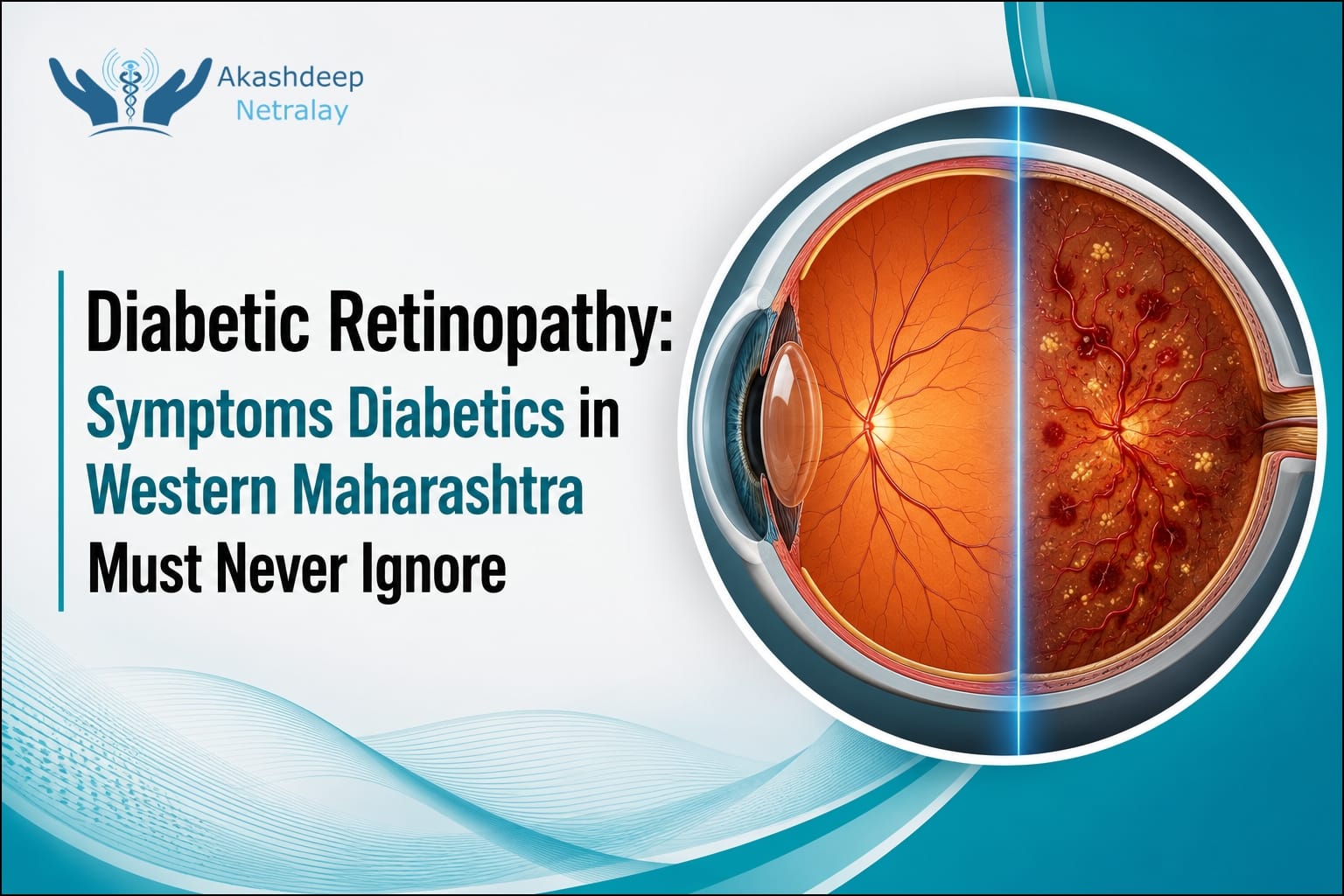
Some diabetics believe that if they are able to see properly, their eyes are healthy. Regrettably, this is not necessarily the case. Diabetic Retinopathy starts without any obvious symptoms and without discomfort or pain.
As the number of diabetics grows in the regions of Western Maharashtra such as Kolhapur, Sangli, Satara, Karad, Miraj, Ichalkaranji, and Jaysingpur, eye problems become more relevant. Fortunately, regular eye tests and timely medical intervention can significantly reduce the risks of vision deterioration in diabetics.
Here we will tell you what diabetic retinopathy is, which symptoms you should pay attention to, how doctors diagnose the disease, and how they treat it.
What Is Diabetic Retinopathy?
Diabetic Retinopathy is one of the diseases associated with diabetes. The disease affects the retina, which is responsible for capturing light.
High blood sugar causes damage to tiny blood vessels supplying the retina. They start leaking fluid, growing, or getting blocked, and therefore, the retina cannot work properly, leading to blurred vision, retinal damage, and even vision loss.
The main problem with this disease is the lack of symptoms during the initial stages. For this reason, it is very important to conduct regular retinal examinations if you suffer from diabetes.
________________________________________
Why All Diabetics Should Worry about Their Eyes
Both people with Type 1 and Type 2 diabetes can suffer from this disease. Some conditions that increase the risk of development include:
- Having diabetes for a long time
- Uncontrolled blood sugar level
- Hypertension
- Elevated cholesterol level
- Smoking
- Pregnancy in women with diabetes
Therefore, the longer you live with the disease, the higher the chances that you may suffer from diabetic eye diseases are. Healthy HbA1c, proper nutrition, physical activity, and following the recommendations of your doctor can considerably lower these risks.
________________________________________
Warning Symptoms
The initial stages of diabetic retinopathy do not cause any visible symptoms. But as the disease develops, you may experience:
Blurred Vision
Your vision gets hazy, and you are unable to read, drive, or recognize faces.
Floaters
Tiny black dots, cobwebs, or threads that appear to float across your vision can be a sign of bleeding in the eye.
Dark Spots
Dark or empty areas appearing in your vision happen due to the leakage of the blood in the eye from damaged blood vessels.
Trouble Reading
You cannot read with your usual glasses.
Poor Night Vision
Difficulty seeing in the dark and while driving at night.
Fluctuating Vision
When your vision is changing from day to day, it can be a sign of unstable blood sugar levels or diabetic eye disease.
Vision Loss
Sudden vision loss requires emergency medical attention because it can be a sign of severe damage to the retina.
Please note that people with the initial stages of the disease experience no symptoms at all.
________________________________________
Can You Suffer from Diabetic Retinopathy without Any Symptoms?
Yes. Diabetic Retinopathy is known as a silent eye disease because it can advance without any impact on your vision.
You can go on reading, driving, and using your smartphone regularly while the process of damaging the retina takes place. When you start noticing symptoms, it may become harder to treat the disease.
For this reason, experts advise conducting a comprehensive diabetic eye check-up once a year regardless of how healthy your eyes feel now.
________________________________________
How Do Doctors Diagnose Diabetic Retinopathy?
The advances in modern ophthalmology allow diagnosing retinal damage before any changes happen to your vision.
There are several tests used by the retina specialist:
- Dilated Eye Examination: eye drops widen your pupils, allowing the retina specialist to examine your retina in detail.
- Retina Examination: your retina specialist checks it for the presence of swelling, bleeding, or any other abnormalities.
- Optical Coherence Tomography (OCT): a painless scan of your retina that provides an image of the retina and helps detect the accumulation of fluids.
- Fundus Photography: high-resolution photographs are taken to monitor changes in your retina over time.
- Fluorescein Angiography: a special contrast dye is injected into your bloodstream to identify the leaking or blocked retinal blood vessels.
________________________________________
Treatment Methods
The method of treatment depends on the stage of the disease. With mild development, proper monitoring and improvement of diabetes control may be sufficient. As the condition develops, active treatment may be required.
Anti-VEGF Injection
An Anti-VEGF injection is one of the most efficient methods for the treatment of diabetic retinopathy and diabetic macular edema.
VEGF is a protein causing abnormal blood vessel growth and leakage of fluids into the retina. Anti-VEGF medications inhibit the work of this protein, thus reducing the swelling and leakage of fluids.
Prior to the injection, the eye is numbed with special anesthetic drops. Thus, most patients do not feel any pain but only pressure during the procedure. It takes just a couple of minutes, and the patient goes home the same day.
The number of injections depends on the stage of the condition and response of the eye to treatment.
Retinal Laser Treatment
Retinal laser treatment involves using focused laser light to seal leaking vessels or shrink abnormal vessels in the retina.
Retinal laser therapy helps reduce the risks of vision loss and is widely recommended in case of advanced diabetic retinopathy.
Patients normally go home the same day and resume their usual activities soon after that. Though the laser treatment cannot restore vision that was already lost, it plays an important role in the prevention of vision loss.
In some cases, more complex treatment procedures, for example, vitrectomy, are required. However, your eye specialist will recommend the most suitable treatment approach depending on your condition.
________________________________________
Is It Possible to Prevent Diabetic Retinopathy?
Though it is not always possible to completely prevent diabetic retinopathy, you can greatly reduce your risks of its occurrence.
Here are some key recommendations:
- Maintain your blood sugar within the required limits.
- Control your HbA1c.
- Follow a healthy diet.
- Exercise regularly.
- Control your blood pressure and cholesterol levels.
- Stop smoking.
- Do not forget about your annual diabetic eye examination.
Apart from protecting your vision, following these rules will help you avoid other diabetes complications.
________________________________________
Why Early Diagnosis Protects Vision
Early diagnosis is one of the best tools to protect yourself from vision loss.
With the help of routine retinal examination, small changes in the retina may be detected before the appearance of any symptoms. By starting treatment at the earliest stage, doctors can slow down or even stop the progression of the disease and preserve vision.
Instead of waiting until symptoms occur, make sure you have regular eye screening as part of your diabetes care.
________________________________________
Why Should You Trust Akashdeep Netralay?
Timely diagnosis and professional treatment are required for managing diabetes-related eye diseases.
Akashdeep Netralay offers its patients:
- Expert eye specialists and retina specialists
- Thorough retinal examination
- Advanced diagnostic equipment
- Tailored treatment approach
- Patient-oriented treatment and follow-up
No matter whether you reside in Kolhapur, Sangli, Satara, Karad, Miraj, Ichalkaranji, Jaysingpur or in neighboring areas, regular eye screening can help detect diabetic retinopathy before it jeopardizes your vision.
________________________________________
FAQ
Can diabetic retinopathy be cured?
Though diabetic retinopathy cannot always be cured, early diagnosis and treatment help to slow down or even stop the progression of the disease and preserve vision.
Is the blurred vision caused by diabetic retinopathy?
No. Blurred vision can also result from the presence of cataract, glaucoma, changes in blood sugar level, or refractive error. A comprehensive eye examination is necessary to find out the exact reason for the condition.
How frequently should people with diabetes undergo eye examination?
Normally, patients with diabetes need to have at least one comprehensive dilated eye examination annually. More frequent visits may be recommended in case of retinal changes.
Are Anti-VEGF injections safe?
Yes. Anti-VEGF injections are widely used and considered safe if administered by an experienced eye specialist.
Is the retinal laser treatment painful?
The treatment is generally tolerable. Special numbing eye drops are used during the procedure and most patients only experience slight discomfort.
Can good diabetes control protect eyes from the damage?
Healthy blood sugar, blood pressure, and cholesterol control can reduce the risks of progression of the disease and protect your vision.
________________________________________
Conclusion
Diabetic retinopathy is one of the most common eye disorders associated with diabetes. However, it does not necessarily cause vision loss. Regular eye screening, healthy blood sugar control, and timely treatment will help preserve your vision for many years.
Do not wait for your vision problems to occur if you have diabetes. Timely retinal examination will help you detect diabetic retinopathy and protect your eyesight.
Book Your Eye Examination Today
If you have diabetes or need to undergo an annual eye examination, contact us to undergo a comprehensive retinal examination at Akashdeep Netralay.
📞 Phone: +91 91005 31005
📧 Email: support@akashdeepnetralay.com